Collaborative Office Design in Vancouver, Burnaby, Surrey, or wherever your office is in the Lower Mainland.
Creating Better Workspaces
In Vancouver’s fast-paced and design-conscious business environment, the spaces where people work matter just as much as the work itself. A well designed office supports communication, strengthens connection, and helps teams collaborate much more effectively.
What Defines Office Design in Vancouver
Office design in Vancouver often reflects a balance between functionality, natural light, and connection to the surrounding environment. Many workplaces prioritize open layouts, access to daylight, and flexible spaces that support both collaboration and focused work. This along with a strong emphasis on wellness and productivity, Vancouver offices tend to integrate natural materials, greenery, and adaptable layouts that evolve in growing times & with growing teams.
Whether it’s a creative studio, corporate office, or shared workspace in downtown Vancouver, thoughtful design plays a key role in how teams interact and perform throughout the day.
When employees feel encouraged to share ideas, whether in a relaxed lounge or around a shared table, the workplace becomes more than a destination. It becomes the ground for innovation. Thoughtful workplace design helps that energy thrive.
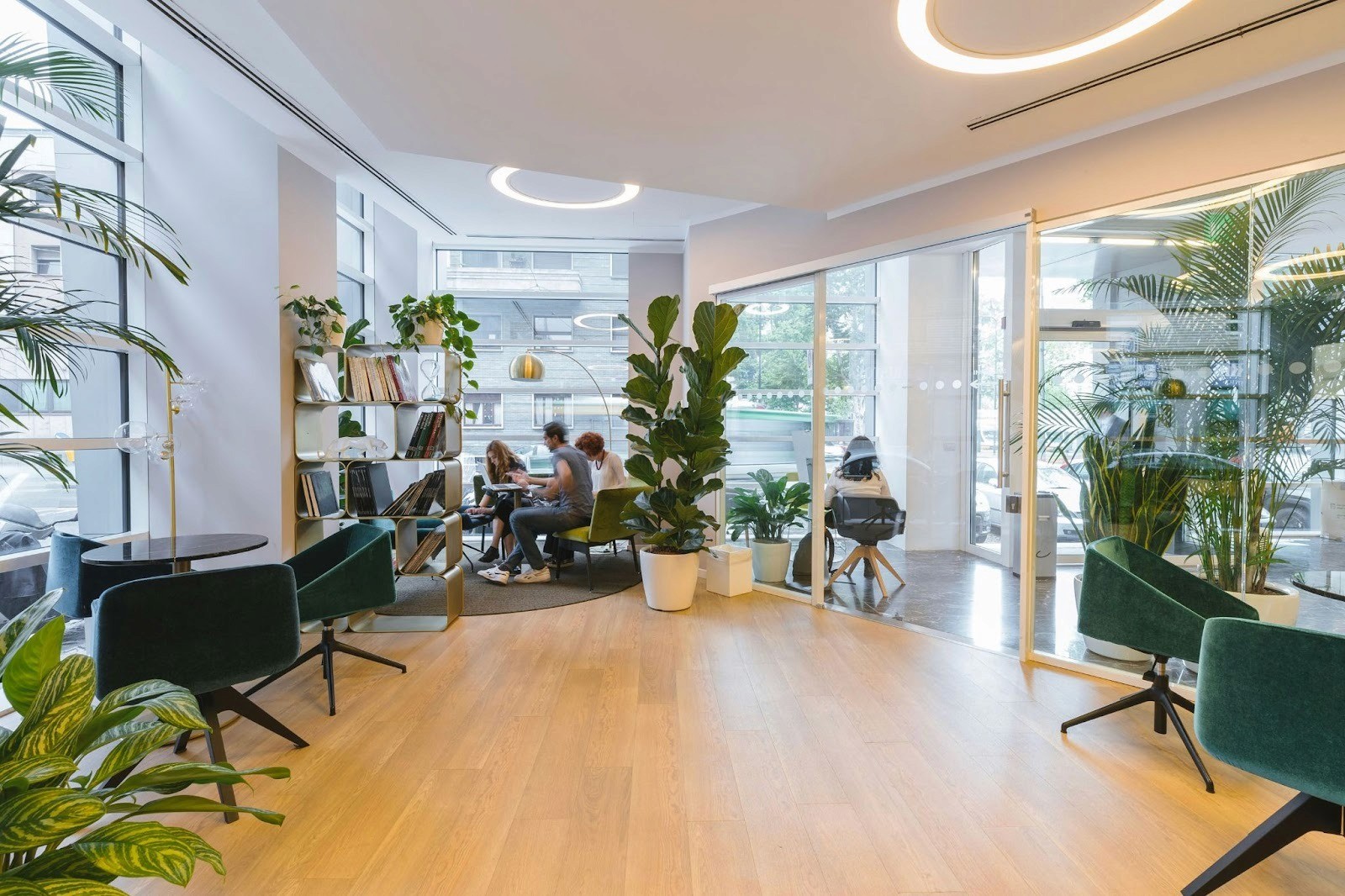
A bright lounge seating area with tables, greenery, and natural light.
Striking the Right Balance: Layout That Encourages Interaction
A strong layout sets the tone for communication especially in Vancouver offices, where open-concept environments and shared workspaces are common. Successful collaborative design blends openness with purpose, ensuring the space feels connected without feeling overwhelming.
Open Zones and Defined Areas
A mix of open seating and semi private pockets allows employees to choose how they want to work throughout the day. A communal bench may work for a group brainstorm, while a quiet nook may support a moment of focus. When zoning is intentional, the workplace feels effortless and intuitive.Central Hubs for Natural Gatherings.
Shared kitchens, lounges, and circulation points—commonly seen in Vancouver office design—create natural opportunities for casual connection. These hubs support quick check ins, spontaneous conversations, and the small moments that help teams stay aligned.
Flexible Breakout Spaces
Soft seating clusters, standing height tables, or casual huddle areas give teams the freedom to meet without booking a boardroom. These flexible spaces become some of the most frequented areas in the office.
When movement feels natural and teams can shift between working alone and together, collaboration becomes part of the everyday rhythm.
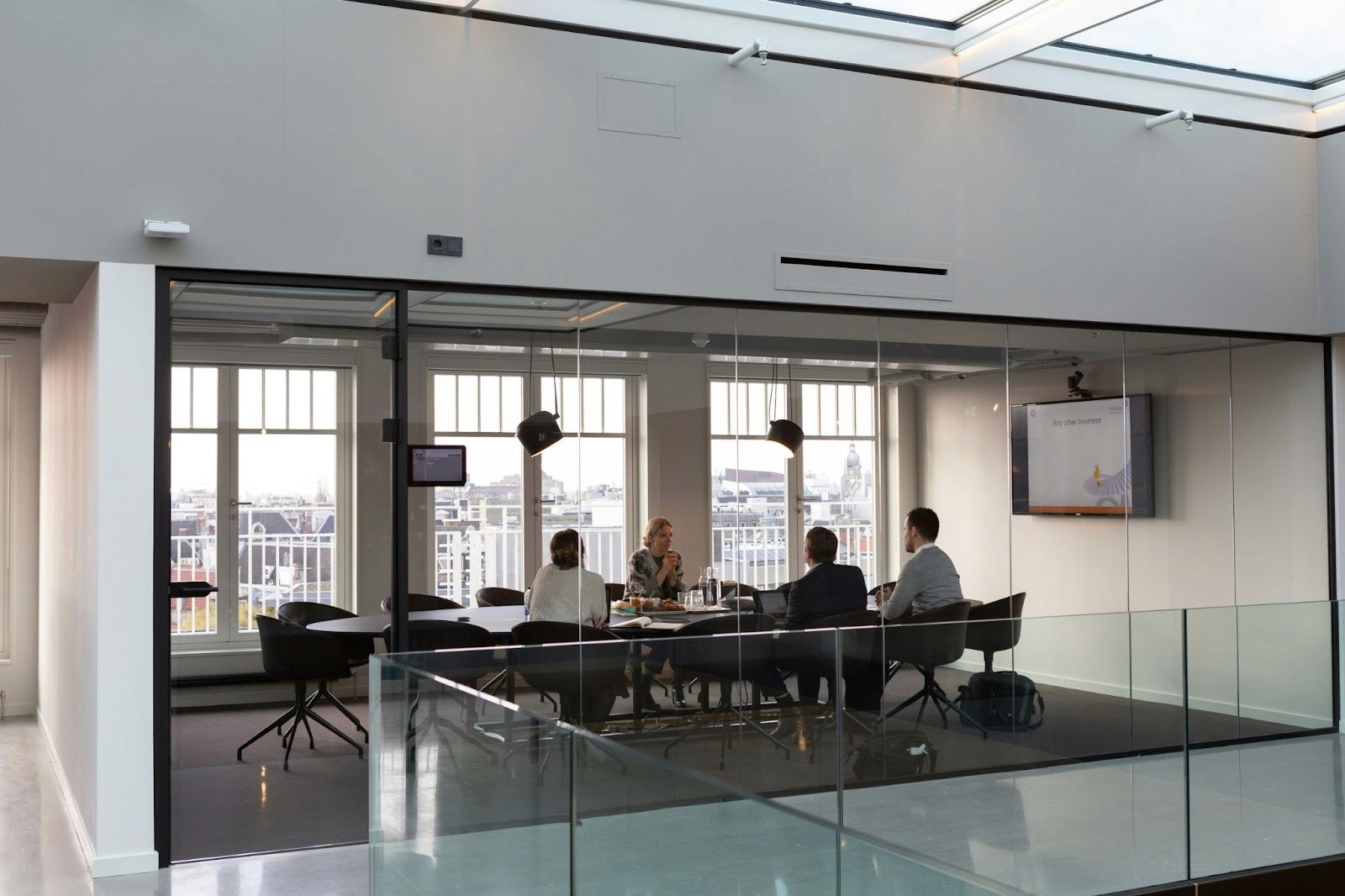
A collaborative workspace featuring a large communal table with multiple people working together.
Furniture That Connects People
Furniture influences how people communicate. It should support both quick
conversations and longer, more focused sessions.
Modular Seating
Pieces that move and reconfigure help teams adjust the room for the moment. A quick brainstorm or a small group conversation becomes simple and fluid when the furniture adapts easily.
Shared Worktables
Large shared tables invite coworkers to gather naturally. They are ideal for sketching, planning, or working through ideas as a group. These tables send a clear message: this is a collaborative place.
Relaxed Lounge Areas
Warm, comfortable seating gives the office a human touch. People tend to open up in relaxed environments, which is why lounge zones often become hotspots for creative thinking.
Furniture should never feel like filler. It should encourage connection.
Technology That Supports Real Connection
A collaborative office needs technology that makes connecting simple and stress free.
Smart Screens and Wireless Sharing
Interactive displays and wireless sharing allow teams to present content quickly without the hassle of cables or complicated setup. Meetings feel smoother, and creativity stays uninterrupted.

Modern Team Presentation in a Collaborative Office Space
Acoustic Design
Sound absorbing panels and strategic materials help maintain balance between active and quiet zones. People should feel comfortable speaking without worrying about disturbing others.
Integrated Power and Charging
When power outlets are accessible throughout the space, employees can work anywhere. This keeps collaboration mobile and flexible.
Technology should support communication rather than slow it down.
Spaces for Focus and Flow
Collaboration succeeds when employees also have dedicated spaces for quiet work.
Privacy Pods and Phone Booths
These small, enclosed spaces give employees a place for calls, video meetings, or moments of quiet focus.
Quiet Rooms for Deep Work
A calm, well lit room with minimal visual noise supports long periods of concentration. Employees return to collaborative spaces feeling refreshed and prepared.
Intentional Lighting and Clean Lines
Soft, steady lighting and a clutter free layout help reduce visual tension. When the environment feels clear, thought feels clear.
A balanced office supports every work mode, not just the collaborative ones.
Cultivating a Culture That Matches the Space
Design sets the foundation, but culture brings the space to life. A collaborative office is at its strongest when the company culture aligns with the environment.
Hold team meetings in casual spaces to build comfort and openness.
Encourage shared tools, such as whiteboards or digital comment platforms.
Allow employees to personalize small areas or gathering spots to create a sense of ownership.
At Cameron Zainali Design Group, we believe that space and culture shape each other. When a workplace supports collaboration, people naturally adopt a more connected mindset.
Office Design Trends in Vancouver
In Vancouver, workplace design continues to evolve toward flexibility and employee well-being. Popular trends include:
Hybrid workspaces with adaptable layouts
Increased use of natural light and greenery
Multi-functional breakout areas
Minimal, clean material palettes
These trends reflect the way modern Vancouver teams work—collaborative, flexible, and design-conscious.
For Vancouver businesses, investing in a well-designed office is not just about aesthetics—it directly impacts team performance, company culture, and long-term growth.
Designing an office that supports collaboration
and communication requires a thoughtful mix of strategy, aesthetics, and intuition. With purposeful zoning, flexible furniture, integrated technology, and places for quiet focus, you create an environment that truly reflects the way people work.
If you're ready planning an office or workspace in Vancouver or the Lower Mainland, Cameron Zainali Interior Design Group can help create a space that supports both collaboration and day-today functionality.
Explore our Services or learn more about our approach on the About page. A well designed office can become a place where creativity and connection flourish.
External Resource for Readers:
For more insights on workplace design and employee engagement, click the link below and read about Workplace Design with the Harvard Business Review:
workplace-design